Lighting is one of those design decisions that can completely change how a home feels.
You can have beautiful furniture, incredible finishes, custom cabinetry, and thoughtful architecture, but if the lighting is wrong, the room can still feel unfinished.
At Guest House Studio, lighting is something we consider throughout the entire design process for our custom homes and renovations in Charleston and across the East Coast. It is not something I like to leave until the very end.
Good lighting should be beautiful, but it also has a job to do.

Lighting is one of the most important elements of a well designed kitchen. Here, sculptural pendant lighting adds architectural interest above the island, while subtle under cabinet lighting and natural light help balance the darker finishes. It's all about layering different light sources to create a space that's both beautiful and functional.
How Do You Choose the Right Lighting for a Room?
I start by thinking about how the room will actually be used.
A kitchen has very different lighting needs than a bedroom. A bathroom needs functional lighting around a mirror, while a dining room gives us an opportunity to use lighting to create atmosphere and establish a focal point.
Before choosing a fixture, think about what happens in that room.
Where do people naturally gather? Where do you need task lighting? What areas need to feel warm and inviting? What architectural features do you want to highlight?
Once you understand how the room functions, choosing the right lighting becomes much easier.
If you are building or renovating and want help thinking through these decisions from the beginning, CONTACT ME HERE!
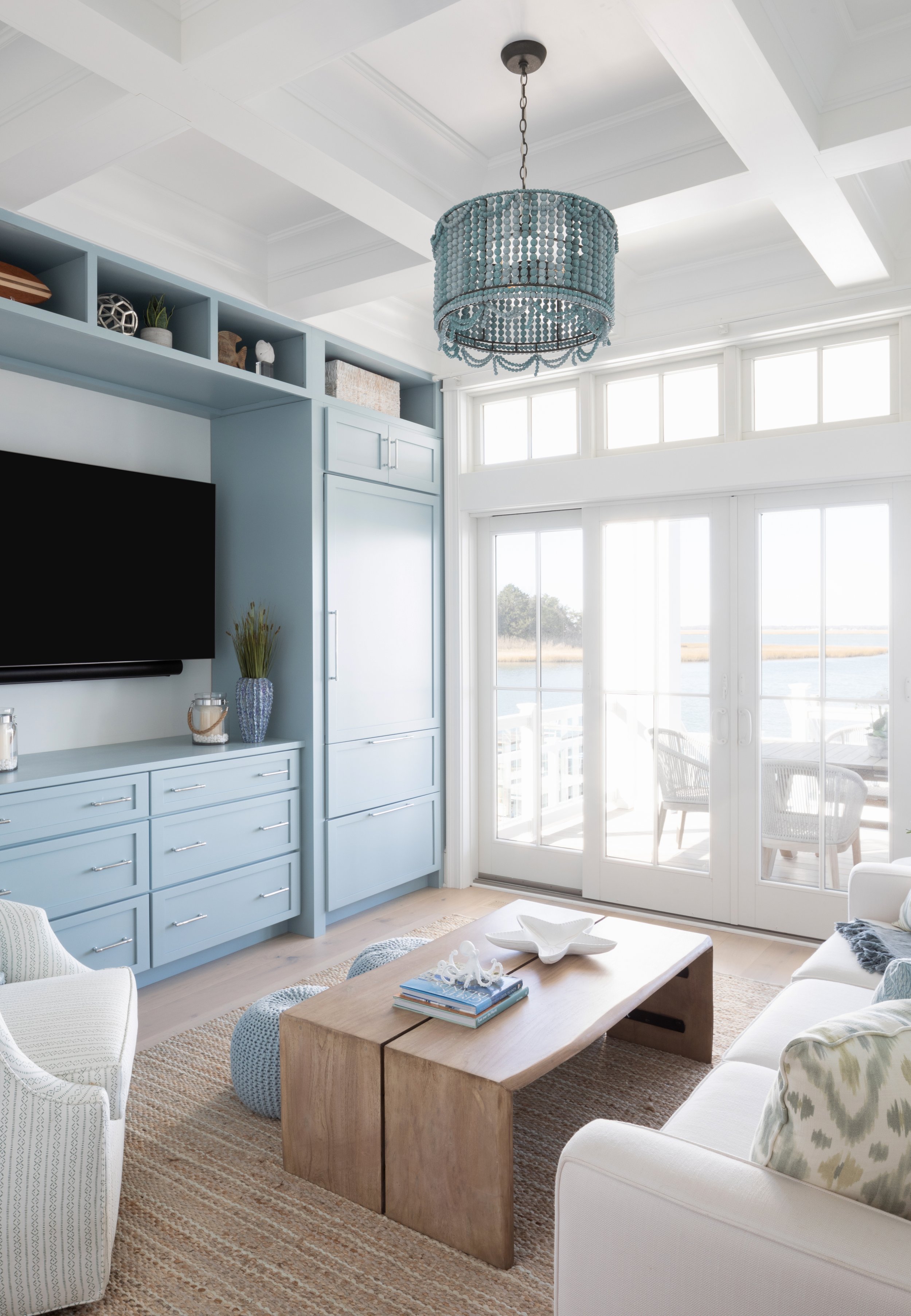
Lighting can be both functional and a beautiful design statement. In this coastal living space, a blue beaded chandelier adds personality, texture, and a subtle pop of color, while the large windows bring in abundant natural light. Choosing a fixture that complements the architecture without competing with the view is key.
Use Layers of Lighting
One of the biggest mistakes I see is relying on one source of light for an entire room.
Most rooms need layers.
Ambient lighting provides the overall illumination. Task lighting helps you actually use the space. Accent lighting adds warmth, atmosphere, and visual interest.
In a kitchen, for example, you may have recessed lighting, pendants over an island, under cabinet lighting, and decorative sconces.
In a bedroom, you might combine a ceiling fixture with bedside lamps or sconces and smaller accent lighting.
When those layers work together, the room feels much more considered.
How Do You Choose Lighting for a Kitchen?
Kitchen lighting needs to balance function and beauty.
You need enough light to cook, clean, and work comfortably, but the kitchen is also one of the primary gathering spaces in many homes. It should not feel overly bright or clinical.
Pendants over an island can help anchor the room and bring in another material or finish. Under cabinet lighting can illuminate work surfaces. Recessed lighting can provide overall light without competing with the more decorative fixtures.
I also think about sight lines. In an open concept home, you may see the kitchen lighting from the living room, dining room, and entry. Those fixtures need to work with the rest of the home.
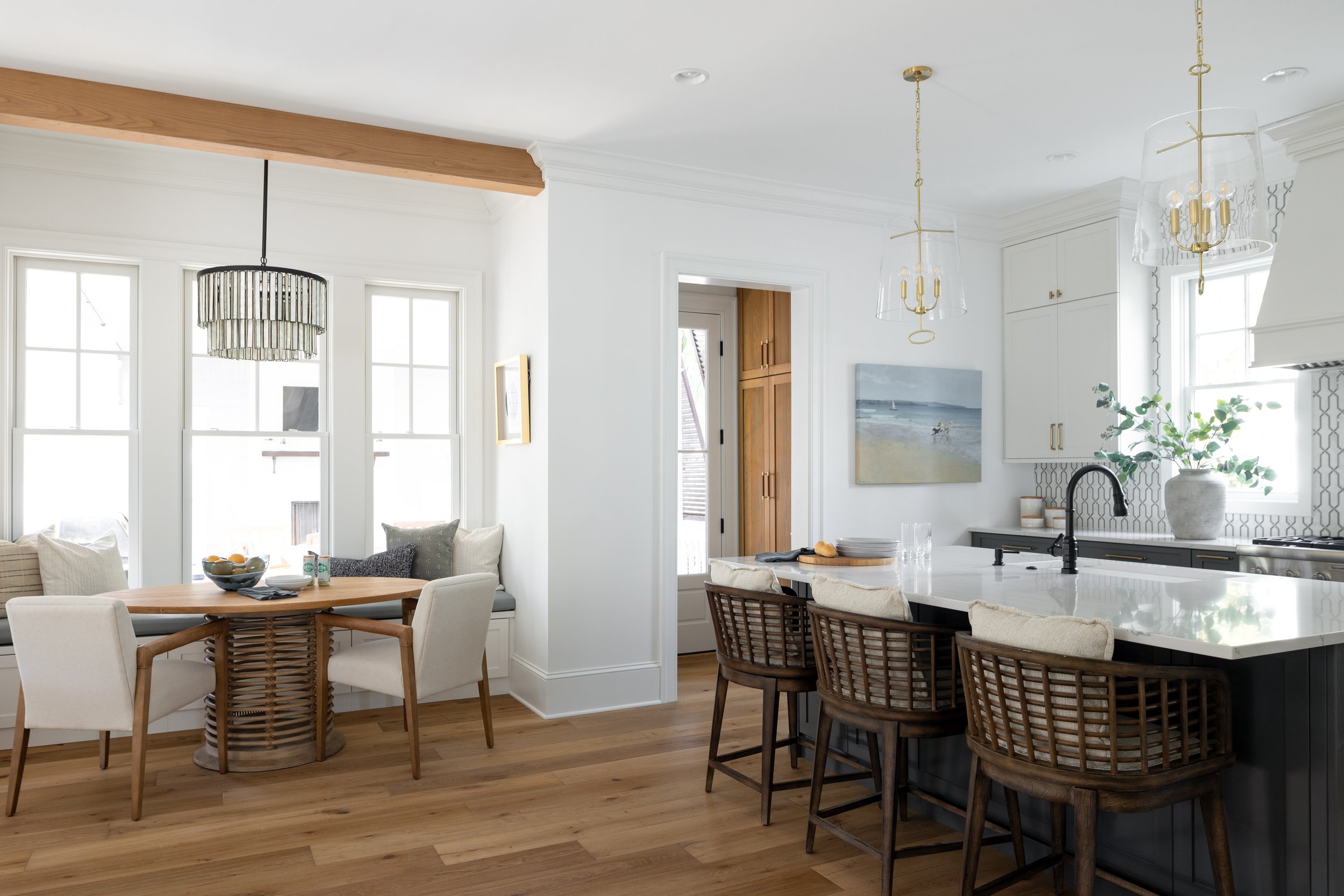
Choosing the right lighting is about more than finding a beautiful fixture. In this kitchen and breakfast nook, two distinct pendant lights help define each space while complementing the overall design. The mix of materials, scale, and finishes adds personality without overwhelming the room, while natural light keeps everything feeling bright and inviting.
How Do You Choose Bathroom Lighting?
Bathroom lighting should be flattering and functional.
Lighting around a vanity is particularly important. Whenever possible, I like to think about how the light hits your face rather than simply placing one bright fixture overhead.
Sconces can provide beautiful, practical lighting while also adding character to the room.
Powder rooms give us a little more freedom. Because they do not require the same level of task lighting as a primary bathroom, decorative lighting can become part of the personality of the room.
This is also why wallpaper and lighting often work so beautifully together in powder rooms. Both give us an opportunity to make a smaller space feel intentional and special.
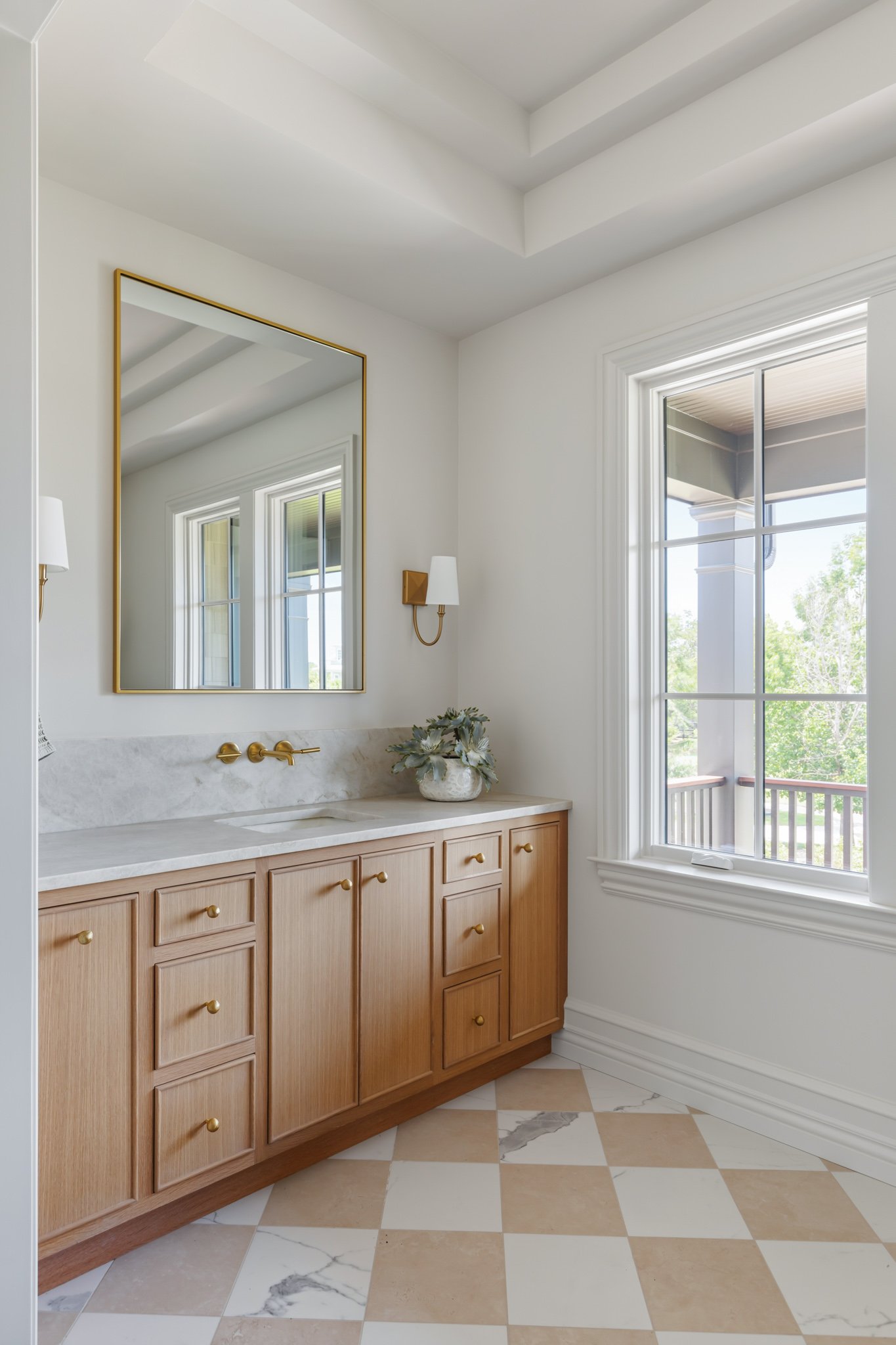
Bathroom lighting should feel both beautiful and functional. Here, simple brass wall sconces provide soft, flattering light beside the mirror while complementing the warm wood cabinetry and natural stone. I love how thoughtful lighting choices can elevate a space without overwhelming the design.
How Do You Choose Lighting for a Living Room?
Living rooms need flexibility.
Sometimes you need more light. Other times you want the room to feel quiet, comfortable, and intimate.
That is why I like using several sources of lighting rather than depending entirely on overhead fixtures.
Table lamps, floor lamps, sconces, picture lights, and architectural lighting can all contribute to the atmosphere of a living room.
This is where lighting becomes less about simply illuminating a space and more about creating a feeling.
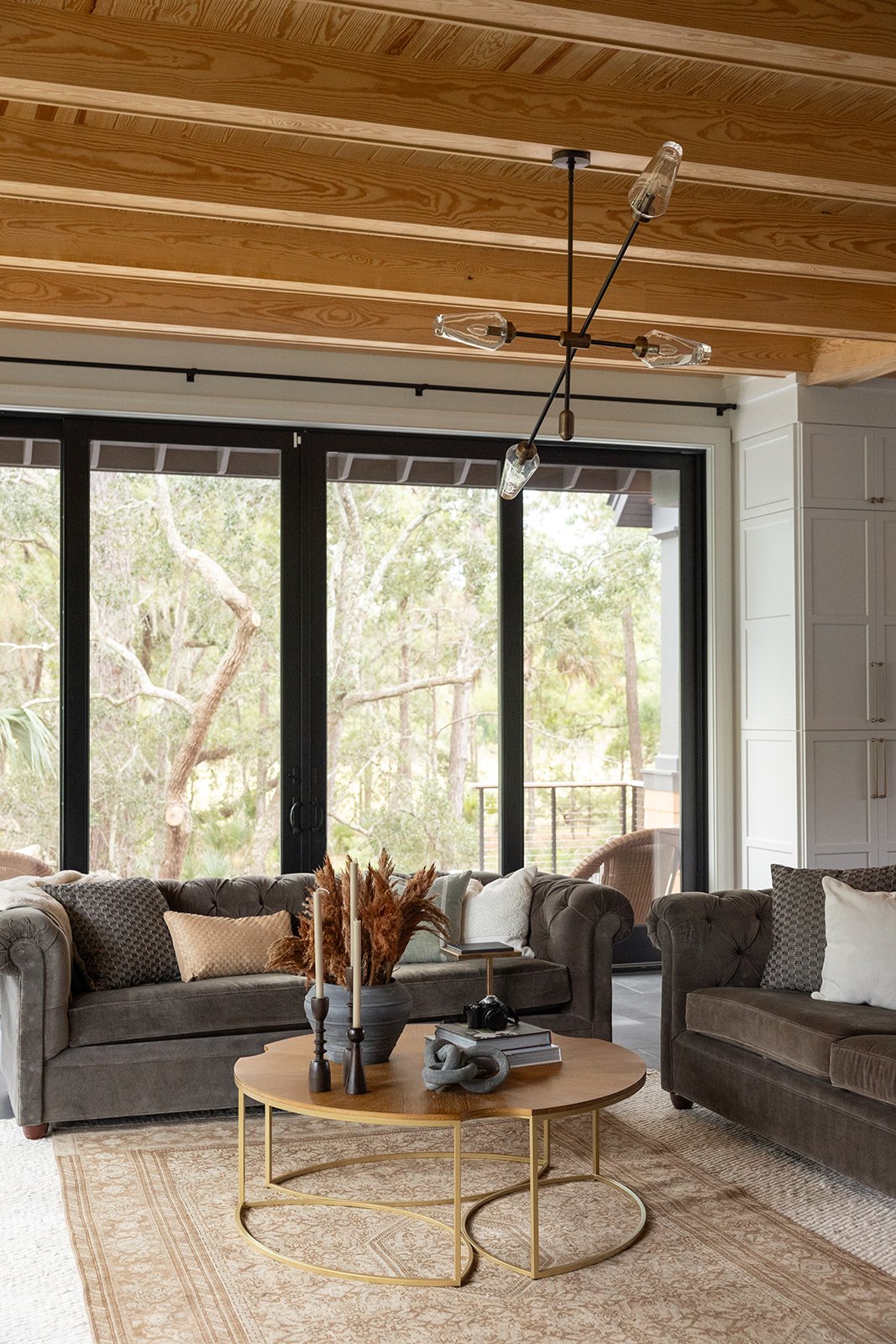
In a living room, lighting should complement the architecture without competing with the space. Here, a modern chandelier with glass accents adds visual interest against the warm wood ceiling beams, while expansive glass doors bring in beautiful natural light. I love choosing fixtures that feel intentional and add personality without distracting from the views.
How Do You Choose Bedroom Lighting?
Bedrooms should feel comfortable and calm.
I generally prefer warmer, softer lighting in bedrooms rather than bright overhead light being the only option.
Bedside lamps or sconces provide functional lighting for reading while also helping frame the bed. A decorative ceiling fixture can add interest, but it should still feel appropriate to the scale and architecture of the room.
The goal is to have choices. You should not need every light in the room turned on at once.
Should All the Lighting in Your House Match?
No.
Your lighting should feel cohesive, but it does not need to match.
Using the exact same finish or fixture style throughout an entire house can actually make the design feel less collected.
I like mixing materials and finishes when it makes sense. Brass, aged metal, glass, ceramic, woven materials, and other finishes can live beautifully together.
The important thing is that there is a relationship between them.
Maybe the shapes speak to one another. Maybe there is a finish repeated in several rooms. Maybe the fixtures all have a certain simplicity or age to them.
The goal is cohesion, not matching.
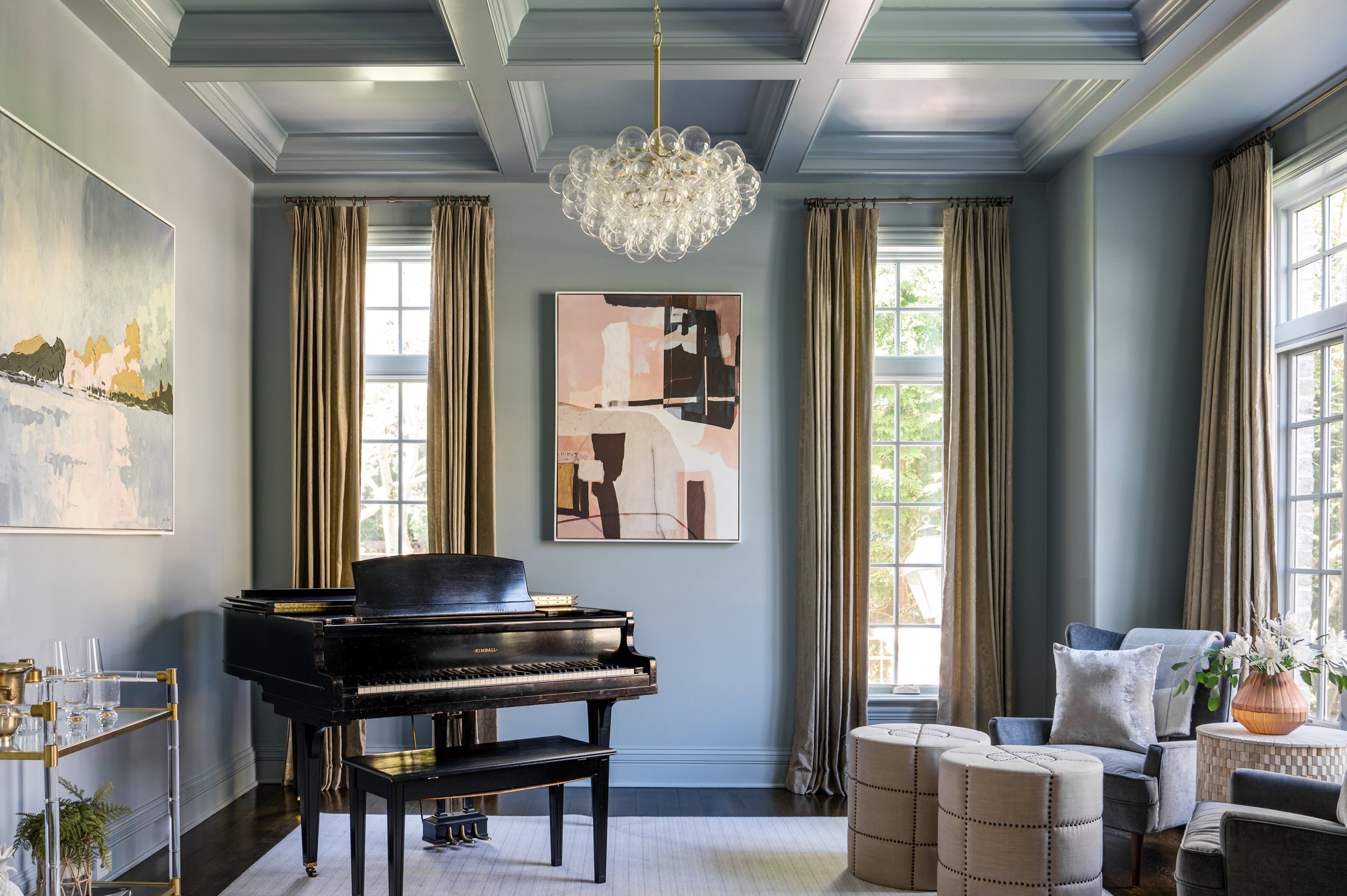
A statement chandelier can completely transform a room. In this music room, a sculptural glass chandelier draws the eye upward, highlighting the beautiful coffered ceiling while adding elegance and personality. I love how the fixture complements the room's architectural details and creates a focal point without competing with the artwork or natural light.
What Size Light Fixture Should You Choose?
Scale is incredibly important.
A fixture that is too small can make an otherwise beautiful room feel unfinished. A fixture that is too large can overwhelm the architecture or interrupt important sight lines.
This is particularly important over dining tables, kitchen islands, in entryways, and in rooms with high ceilings.
Rather than choosing a fixture based only on how it looks online, consider the dimensions of the room, ceiling height, furniture placement, and the other architectural elements around it.
This is one of those details where working with an interior designer can make a significant difference because we are looking at the fixture as part of the entire room rather than as an individual purchase.
If you are planning a Charleston renovation, custom home, or East Coast design project and want help creating a complete lighting plan, CONTACT ME HERE!
Do Not Forget About Natural Light
Some of the best lighting in a home is not a fixture at all.
Natural light affects everything.
When we are designing a space, I am always paying attention to the windows, orientation of the room, and how sunlight changes throughout the day.
A room that receives abundant natural light may need something very different from an interior hallway or a north facing room.
Natural and artificial lighting should work together.
Lighting Should Feel Like Part of the Architecture
The best lighting does not feel like an afterthought.
It feels like it belongs in the house.
Whether we are working on a Charleston renovation, a coastal home, or a custom home elsewhere along the East Coast, I want the lighting to complement the architecture and materials while still bringing personality into each room.
Sometimes that means a statement fixture. Sometimes it means a simple sconce. Sometimes the best lighting choice is the one you barely notice because it makes everything else in the room look better.
For more interior design tips, current projects, and a look behind the scenes at Guest House Studio, follow me on Instagram!
And if you are building or renovating and want help creating a home where the lighting, materials, furnishings, and architecture all work together, [tell us about your project here]. We would love to learn more about your home.